Peter Katz
The Book of MirrorsPeter Katz is a literary agent at Bronson & Matters and the first professional reader shown responding to Richard Flynn’s manuscript. His curiosity, unusually personal investment in Flynn’s query, and later friendship with Roy Freeman make him a link between the book’s publishing story and the investigation surrounding the Wieder case.
Identity and Background
Peter is described by his friend Roy Freeman as shy and reclusive, yet highly cultivated and someone from whom others could learn a great deal. The two met while studying at NYU and became friends. Peter came from a long line of lawyers, but chose literary representation instead, making him something of a black sheep in his family. He also resisted his mother’s efforts, made in concert with families of eligible young women, to arrange a marriage for him; he stubbornly remained a bachelor.
At Bronson & Matters, Peter had begun as a junior assistant and worked as an agent for five years. The agency accepted unsolicited submissions, exposing him to a steady stream of query letters, most of which he found awkward, lifeless, or weighed down by irrelevant detail. This professional routine gives particular force to his response when one submission feels different.
Richard Flynn’s Submission
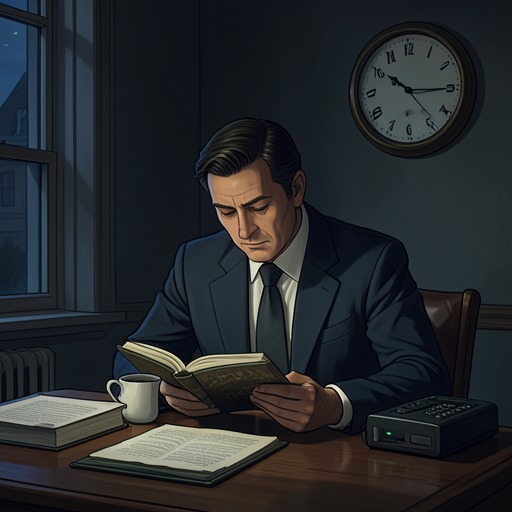
Peter received Richard Flynn’s submission in January, during the agency’s post-holiday return to work. The message escaped his junk folder and joined dozens of others in his inbox. Intrigued by the query and its attached manuscript pages, Peter printed them and put them in his desk drawer. A busy deal intervened, and he forgot the papers until nearly the end of the month, when he rediscovered them among the submissions he had set aside to read over the Martin Luther King Day holiday weekend.
The letter, signed by Richard Flynn, stood out against Peter’s experience of the submission pile. It was concise and well written, and conveyed a warmth that made Peter feel it was addressed to him personally. He suspected, though could not explain why, that Flynn had chosen him rather than contacted a list of agents. Peter’s response was already more than a routine assessment: he felt a private sympathy for the unknown writer and hoped the manuscript would justify the promise of the letter.
After reading the excerpt, Peter considered the work as a possible acquisition. True-crime books were popular, and the case at its center was unusual; Joseph Wieder had been a public figure and remained important to the history of American psychology. Peter also judged Flynn’s writing fluid and gripping, and thought a publisher might be willing to pay substantially for the book. The next morning, he emailed Flynn from his personal address to request further contact. When no reply came, he called the cell number on the letter, reached a voicemail box that was already full, and tried again after several more days. By then the phone was switched off. Peter finally went to the address near Penn Station that Flynn had provided, pursuing the author in person when ordinary attempts to reach him failed.
Friendship with Roy Freeman
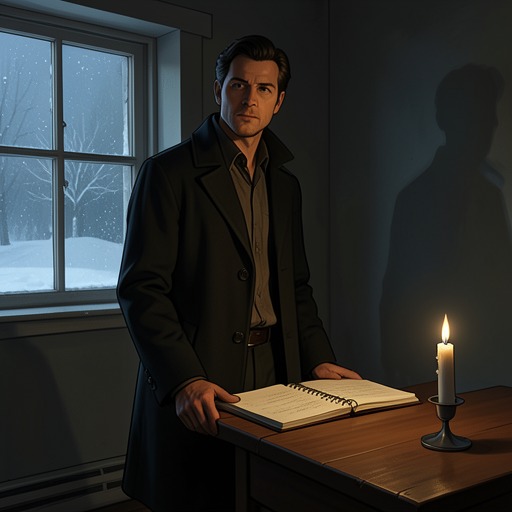
Peter’s later importance emerges through Roy Freeman’s recollection of their friendship. By the beginning of March, Roy had lost his work and was trying to make a living through freelance assignments after years in journalism. Peter told him about the Richard Flynn manuscript and invited him to lunch at Candice’s on East 32nd Street. The meeting took place after days of heavy snow; Peter arrived in an overcoat so long that he kept tripping on its hem, carrying an old leather briefcase as he dodged puddles on the sidewalk.
That conversation makes Peter a conduit between the manuscript and Roy’s world. Roy later reopens the investigation into Joseph Wieder’s murder and seeks an interview with Frank Spoel, the man who confessed to the killing. Peter is not presented as conducting that investigation, but his connection to the Flynn manuscript helps bring the publishing thread into the same narrative space as the old case. His role therefore rests on two forms of attention: the agent’s close reading of a promising submission and the friend’s passing of that story to Roy, whose questions lead back toward the murder.